Touch Against Capture
Safety as an Action of Love

For several months, I’ve been carrying a sentence around.
Safety as an action of love.
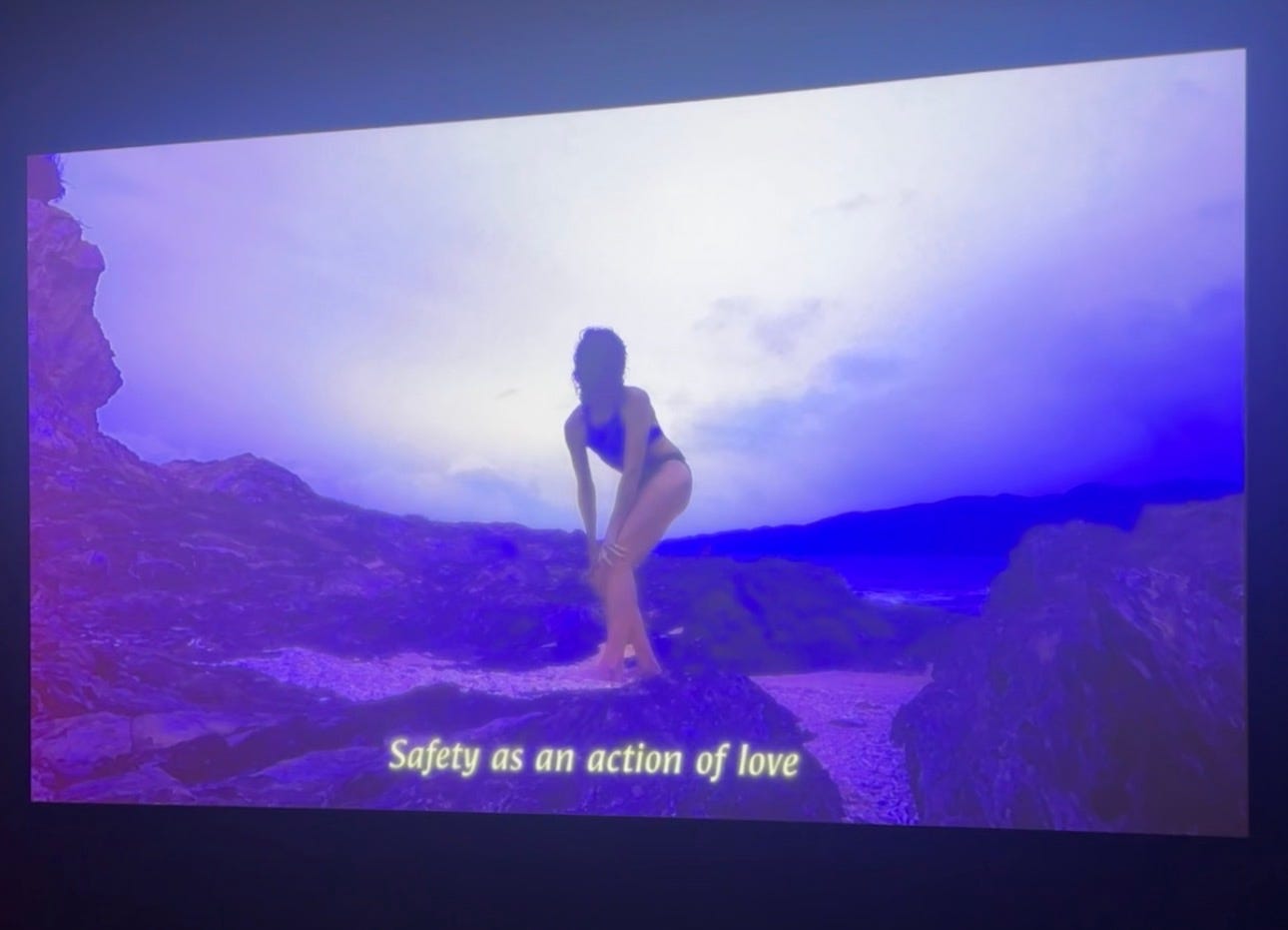
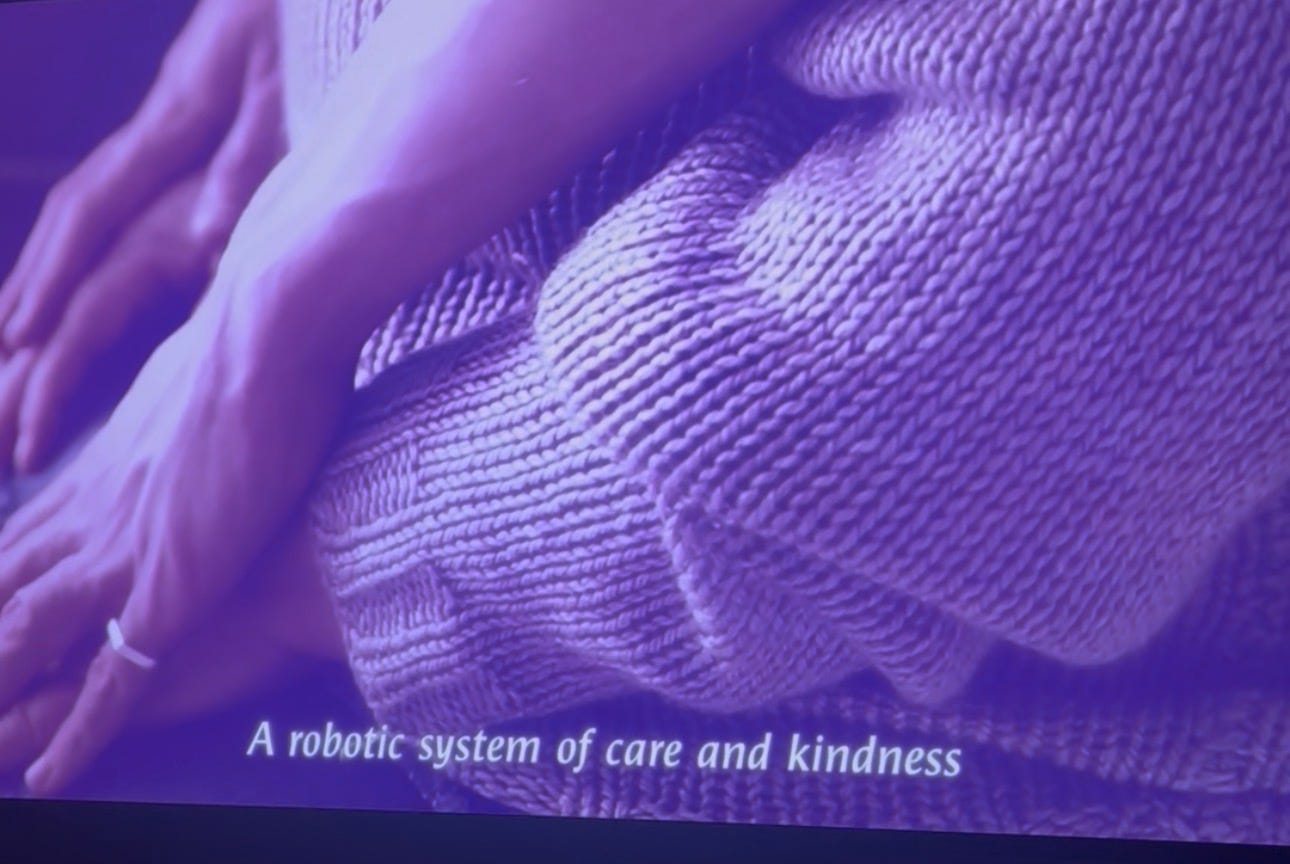
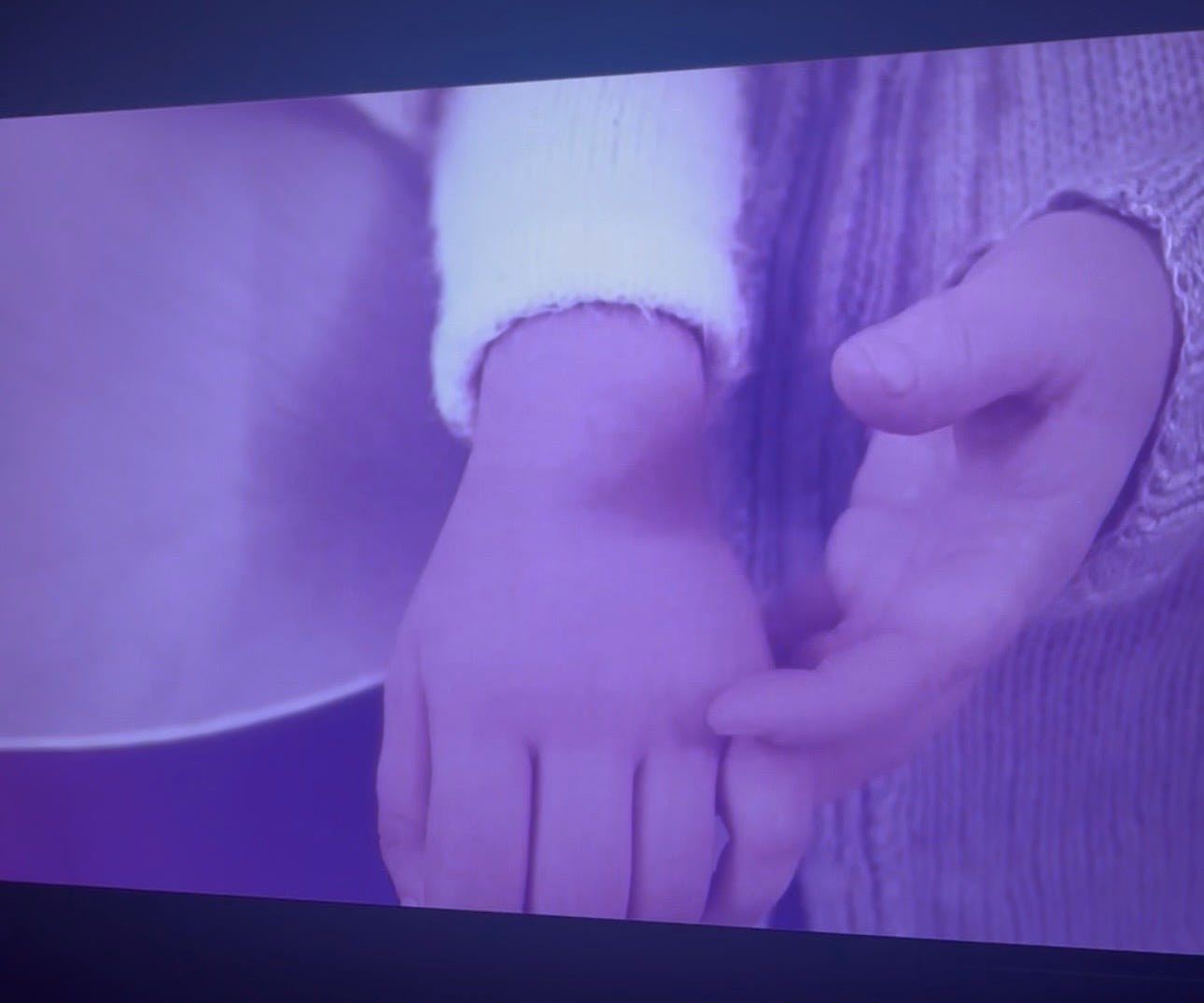
I heard it at the Wellcome Collection in artist Rory Pilgrim’s 2018 film Software Garden [1] as part of a recent show on aging. A trans woman moved through water with a softness that felt almost unbearable to witness in the present political moment. The camera lingered on her hand drifting through the sea. In other scenes hands rested on other hands, fingers finding and holding fingers, trans bodies, disabled bodies, allowing themselves to be met collectively. Pilgrim’s lyrics moved around them: a robotic system of care and kindness, a human system of care and kindness, an embodied system of care and kindness. A body can only take so much. Skin can only heal so fast. Post Love. Post Human. And then a voice asking: is there a way to touch without inflicting? Is there a way to be without feeling?
The word safety has acquired a peculiar life. It appears in ministerial speeches, procurement contracts, surveillance infrastructures and legislation that steadily enlarges the state’s capacity to watch, prohibit and classify. By the time it reaches everyday life, it’s already passed through institutions that many marginalised communities have encountered as sites of scrutiny, containment and harm. I’d learned that history before I began practicing massage, from Black organisers documenting police violence [2], from abolitionist books and writing [3], from community campaigns that painstakingly reconstructed state accounts against the testimony of those who had survived them, and from years of watching policing extend itself wherever people attempted to organise life differently. The word safety had already been taught to me as contested before I ever placed my hands on another person’s body.
Then I watched somebody receive the weight of another person’s arm.
During my advanced lomi [4] training, that image returned with almost physical force. There was a moment in what we were sequencing that couldn’t be choreographed through technique alone. One of my hands slid beneath somebody else’s wrist, another beneath her elbow, and my arms began to lift hers. Sometimes a body continues holding itself. Sometimes the muscles yield so quietly that the change can almost be missed. Her shoulder softened. Her elbow gave up its defence. The whole weight of her precious arm arrived in my delicate hands. Her whole nervous system decided, in those few seconds, that impact didn’t need to be prepared for. That surrender couldn’t be demanded. Complete embodied safety emerged entirely from relation.
Massage is slowly rearranging how I think. Your body will arrive with stories and histories already moving through it: your shoulders perhaps shaped by work, apologies for carrying a shoulder bag, your ribs or stomach organised around vigilance; your clenched jaw perhaps trained into endurance, unconscious of when its bite releases, your grief finding tissue before your memories have even found speech. On the table, I see your histories arriving sideways, often through a held breath, a gentle flinch beneath a slight increase of pressure, your hand maybe hovering before it permits itself to completely rest, your stomach perhaps tightening before it understands that my touch has come very gently. One’s body keeps speaking to me where biography goes quiet.
Two weekends ago, while I was giving lomi in a tent at a small summer festival, one of those histories suddenly became audible. During the session, my arm slid underneath a person’s neck so I could hold him around his shoulders, while my other hand glided up and came to rest upon his stomach. I stayed there for a couple of breaths. Then, I began gently massaging his abdomen in slow clockwise circles. This simple gesture feels like an embrace. Though I could sense something deep was there, I had no idea that tears were gathering behind his closed eyes. Afterwards, as he was reintegrating and sharing, he told me in that moment he’d almost cried. When I asked what was blocking him from letting his tears go, he said, “The voice of my grandfather. He always told me ‘boys don’t cry’.”
Without opening the tent, his grandfather had entered. Though many decades had passed, three words had continued organising this person’s entire embodiment, becoming his posture, his restraint, his inheritance, his inability to fully release his emotions. We sat with that recognition for a while. I told him the embrace belonged to his grandfather as much as to him. The voice had arrived with him, and my touch had reached the place where this voice still lived. Some inheritances ask to be argued with. Others ask first to be witnessed. Attention has a curious quality. It loosens what certainty keeps tightly bound.
Massage has been altering my idea of justice. Every session begins with quiet negotiation: care, consent, pace, pressure, permission, the micro adjustments through which another nervous system begins to test whether yesterday’s defences are still required today. Hyper-vigilance has usually been earned. Muscles remember their reasons. A body softens through evidence gathered slowly: this pressure listens, this hand waits, this person notices, this room can hold what arrives.
Touch is one of humanity’s oldest political technologies. Every society organises who may touch whom, under what conditions, with what degree of fear, permission, ownership, punishment or trust. Authoritarianism reaches the body by narrowing the field of possible encounter. It teaches suspicion, vigilance, separation, classification, the permanent anticipation of force. Liberatory movements rebuild another tactile world through food, shelter, music, sex, care, protest, ritual, mourning, massage, friendship, defence, and the ordinary labour of keeping one another alive.
Britain has its own muscular habits. Years of political rhetoric have cultivated an atmosphere in which suspicion feels ordinary. People of colour, migrants, muslims, trans people, disabled people, protesters and asylum seekers appear before the public as figures to be assessed, questioned, managed or defended against. These developments are usually described as policy or ideology, yet their consequences settle far below opinion. They become breathing patterns. They alter how people enter rooms. They shape who speaks first, who apologises, whose silence is misread as consent, whose body stays prepared for interruption.
Pilgrim’s film returned to me through that tension. Every gesture unfolded with extraordinary attentiveness. Hands met without urgency. Bodies lingered long enough for trust to gather between them. Care emerged as choreography, through the patient arrangement of attention between bodies. I began to recognise a political education taking place through movement: hands finding hands, weight offered and received, attention held long enough for another nervous system to believe it.

Working welfare in queer nightlife has taught me another version of this. Safety there is made through small acts of attention that are rarely visible from the outside: noticing the person who’s quiet at the edge of the room, bringing water before panic takes hold, asking a friend to stay close, walking someone into fresh air, keeping an eye on the door, watching the room’s temperature change before anything has officially happened. The work is sensory before it becomes procedural. My body reads the room without turning people into risks. It asks for a kind of attention that can intervene without taking over. A consensual hand on a shoulder can become reassurance, pressure, warning, interruption or care depending on how it arrives. Every gesture carries a politics.
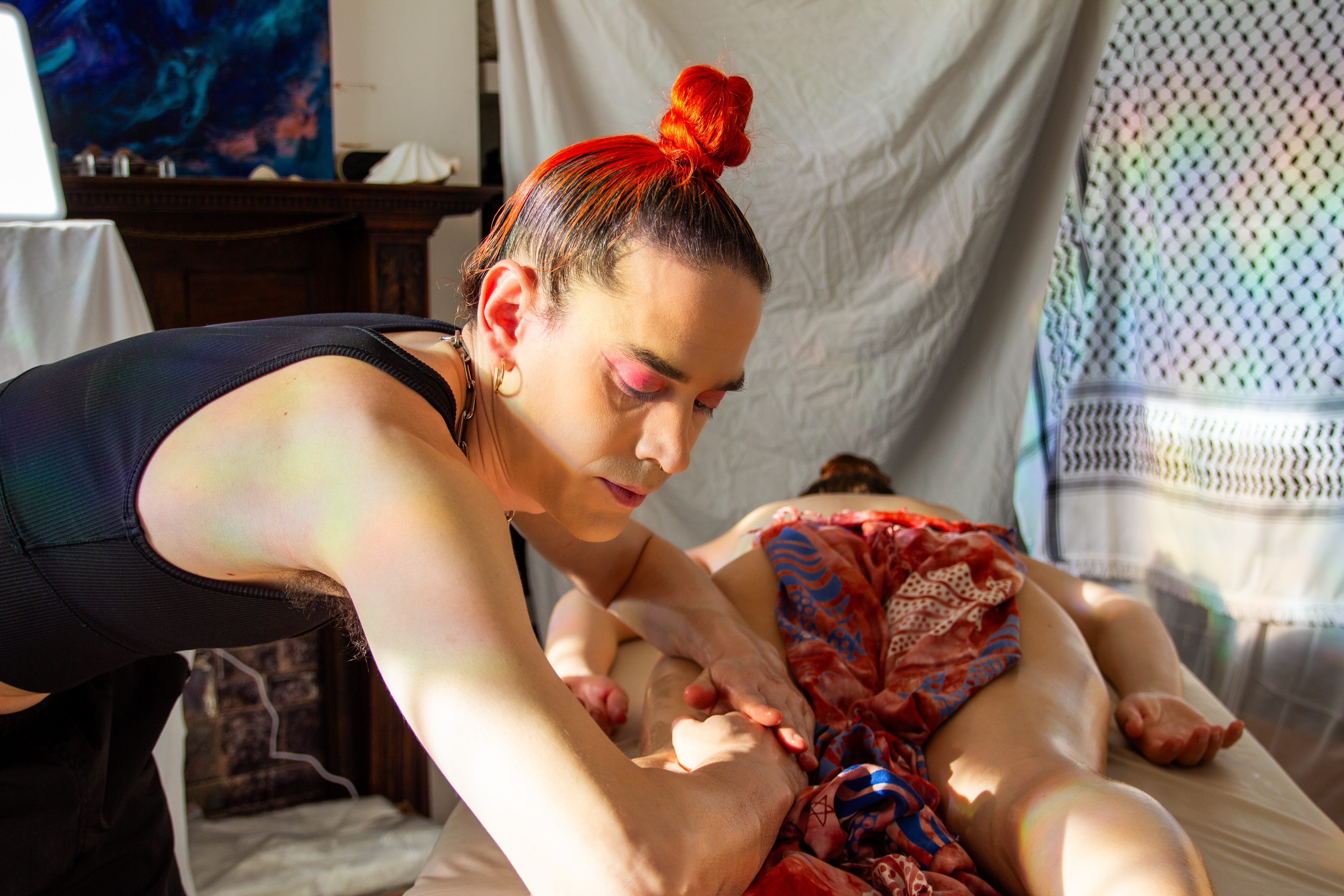
Massage has taught me that a session begins long before touch. Two nervous systems meet before two skins do. The body asks questions that never become speech. How quickly are you moving? Are you listening? Will you notice if I jump or pull away? Can I become heavy here? Will you continue holding me if I stop performing competence? Every political world answers these questions through its arrangements of dependency, suspicion, rest, exposure, obligation and care.
The massage room holds more of the world than its walls admit. Parliament enters with every client, along with the sediment of rent, transphobia, headlines, the cost of living, family history, welfare assessments, police encounters, gendered scrutiny, border regimes and wars taking place far beyond the room. These forces rarely announce themselves as politics once they reach the table. They arrive as shallow breathing, increased heart rate, digestive pain, a guarded abdomen, a jaw held through sleep, a shoulder that won’t allow itself to drop. By the time a body asks for touch, it’s often spent years adapting to conditions that demanded vigilance as a form of survival. Politics eventually becomes flesh.
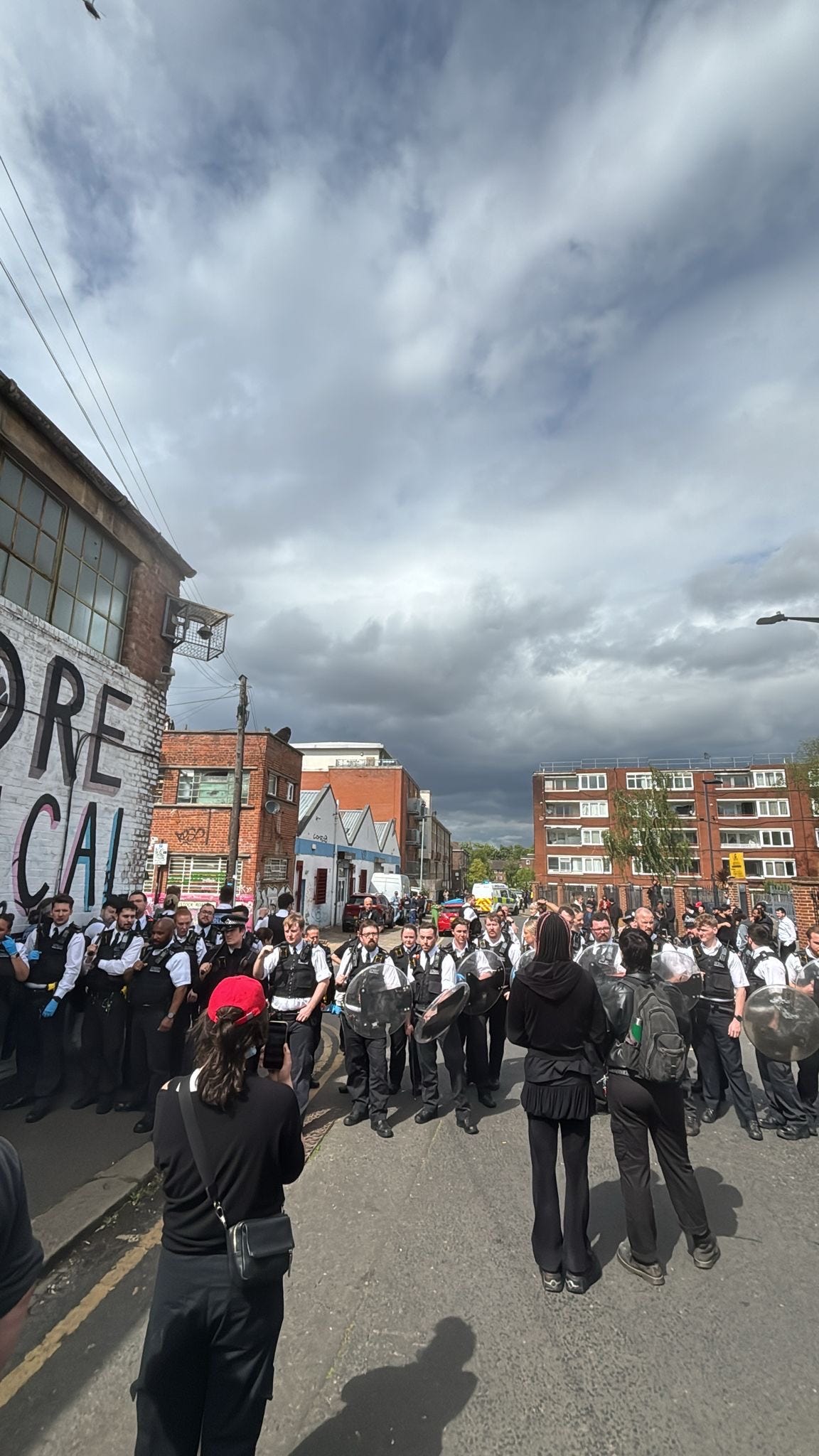
From that knowledge, news of Anastasia House reached me differently. I followed its defence from a distance, through messages, images, callouts and statements moving across trans networks where people warn, grieve, organise and protect one another. The distance matters. I’m writing from the place where an event enters the body through circulation: the tightening stomach, the refresh of the chat, the question of who can get there to defend, who’s been hurt, what’s needed, who remains inside. Anastasia House arrived as alarm and recognition: a home defended by folx who knew that ordinary routes to shelter had already been blocked by rent, bureaucracy, family rejection, migration regimes, disability cuts and the violence of a city organised around property.
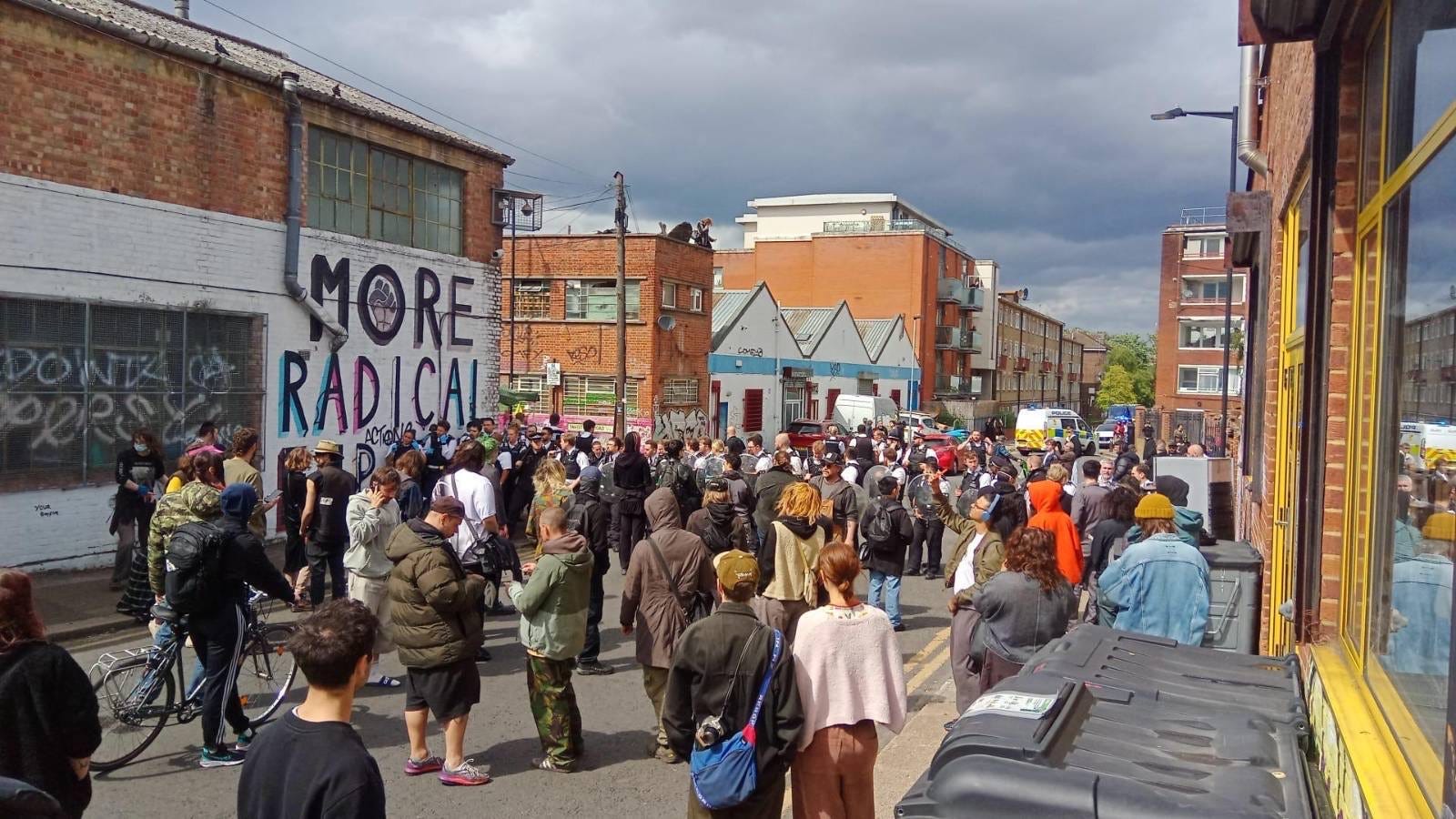
The press has a habit of making these scenes smaller and uglier than they are [6]. Its language performs a kind of eviction before the door has even opened. Anastasia House becomes labelled a “squat” instead of community housing; residents become “squatters”; neighbours and supporters become a crowd; police violence becomes public order; landlords, bailiffs and hired gangs begin the story as the injured party. Even the phrase “falling through the cracks” softens what has happened under austerity. It turns abandonment into accident. People are pushed into impossible shelter arrangements by policy, poverty, estrangement, hostile administration and a housing market that leaves buildings empty while living trans and migrant bodies are made precarious. They don’t disappear from society. They become visible at the point where society reveals what it’s willing to protect.
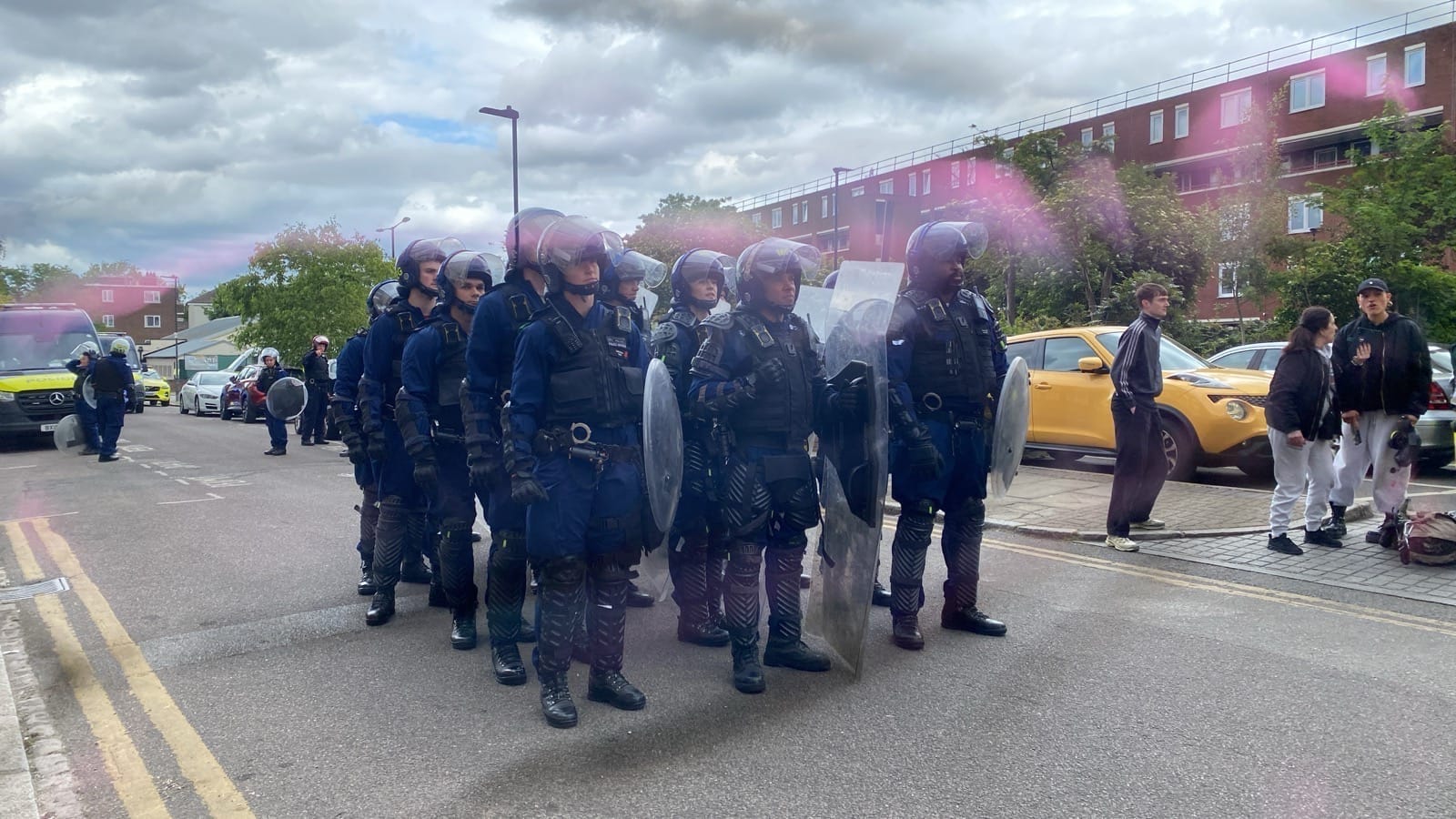
Residents and supporters described men sent to force entry, ankle grinder tools and weapons brought to a home, and police power gathering around those attempting to illegally remove people. The scene revealed an order of protection before anyone named it. Property drew the line around itself. The people inside were treated as a disturbance to be managed. What moved through the networks afterwards carried another account: neighbours bringing food, local people recognising the residents as part of the community, supporters staying close enough to make disappearance harder, the slow work of keeping watch, repairing damage, raising funds, checking who was safe, returning again.
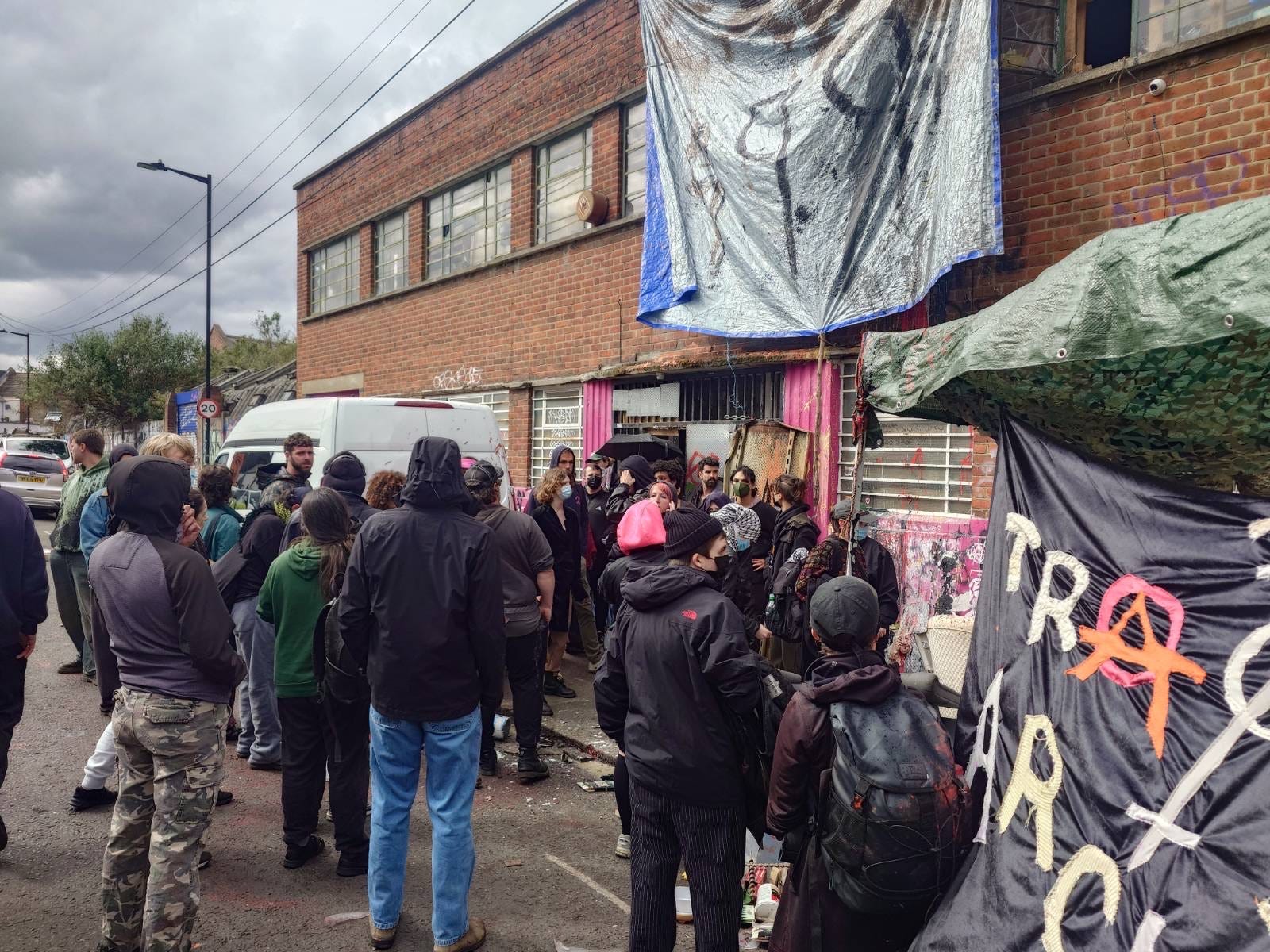
This is where McKenzie Wark’s toast to femmunism [7] returned to me. Wark writes about queer rooms, parties and fugitive forms of life that fascism tries to possess and repeatedly fails to contain. Around Anastasia House, that queer trans fugitive life acquired the weight of weather, hunger, tiredness and repetition. It lived in food, repairs, gardens, messages, lookout shifts, shared cigarettes, the repaired door, the hand briefly resting on someone’s shoulder, the collective insistence that vulnerable people remain difficult to remove. Care became infrastructure. Relation became defence.
The targeting of Anastasia House was also a targeting of people pushed underground by the present: people living where housing crisis, transphobia, borders, disability, family violence and poverty converge. The community response mattered because isolation is part of capture. People are easier to remove when they have been made socially unreachable. The defence of the house said something else in practice: those inside were known, loved, needed, defended, and already part of a wider body.
Sovereignty has many theorists. Soup has fewer. Yet the nervous system knows the politics of being fed, accompanied and remembered through the night. Home begins where someone notices your absence, where a garden keeps growing, where fear can be metabolised with others, where the day doesn’t have to be survived alone. Relation keeps producing worlds that power never authored.
Palestine keeps arriving inside Britain because the technologies of occupation travel [8]. Surveillance companies market software through military violence and receive public contracts. Protest legislation accumulates. Counter-terror powers expand. Police learn new habits. Language follows. Institutions adjust. Palestine has become the place where Britain’s political vocabulary reveals itself most clearly. Security stretches across bombed hospitals. Self-defence expands across occupied territories. Protest acquires the language of extremism. Direct action against the machinery of war enters the courtroom as terrorism. The dictionary begins to reorganise itself around domination.
Palantir belongs inside this essay because it offers a technical imagination of capture [9]. It converts relation into pattern, pattern into prediction, prediction into governance. Movements, associations, anomalies, suspected futures: everything becomes legible from above. Surveillance does something to touch. It reorganises the space between bodies. It changes who gathers, who hesitates, who is watched, who is marked, who becomes afraid of the traces left by friendship, solidarity, desire or dissent. A hand reaching for another hand becomes data under certain regimes of attention. A crowd becomes a threat map. A network becomes a target.
When Palestine Action activists were sentenced as terrorists [10] for damaging machinery linked to war, I found myself thinking again about hands. Their hands entered the court record as evidence, property damage, threat. Beyond that record they carried another history: the attempt to touch machinery designed to carry violence at a distance. The state fears broken machinery. It also fears ordinary people discovering one another through direct action: bodies meeting, planning, refusing, trespassing, carrying tools, holding banners, sleeping outside courtrooms, raising money, bringing food, standing beside those being disappeared into prisons and categories. Governments describe these activities as logistics. I’ve started thinking of them as political touch.
For weeks I kept thinking about my mother. Every year at the Seder table she would cry during the same prayer.
Vehi She’amda.
Bechol dor vador omdim aleinu lechaloteinu.
In every generation they rise against us to destroy us.
As a child I heard those words as a lesson about antisemitism. The tears seemed to belong to jewish suffering, transmitted faithfully from one generation to the next. Only much later did I begin to wonder whether the song was handing down something stranger than fear. It remembers recurrence. Every generation inherits its own forms of domination. Every generation also inherits the obligation to remain human within them.
I’ve found myself returning to those words while learning lomi, watching Pilgrim’s film, standing alongside queer and trans communities under attack, mourning Palestine, and trying to understand what kind of place Britain has become. The melody my mother cried through has begun to sound different. It carries endurance without promising rescue. It hauls memory without requiring conquest. It transports the knowledge that domination returns in new forms, and that each return asks something of those who live through it.
In every generation people invent new techniques for breaking relation. Sometimes they arrive carrying flags, sometimes ledgers, sometimes theological certainty, sometimes biometric databases. Sometimes they call themselves empires, sometimes democracies. Sometimes they speak the language of civilisation while administering disappearance. The forms change more quickly than the grammar.
Zionism has always felt profoundly unfamiliar to me because its promise rests upon capture: territory, history, memory, jewish identity itself. It gathers thousands of years of jewish life across continents, languages and political traditions into a single nationalist story that presents itself as inevitable. So much jewish life unfolded through wandering, translation, borrowing, hosting, arguing, dwelling among other peoples. The judaism I inherited always carried exile inside it. That exile now feels like a political inheritance.
The Bund understood something of this. Doikayt, hereness [11], asked how justice might be built exactly where one already stood, alongside neighbours whose liberation remained inseparable from one’s own. Home emerged through solidarity, through relation, through the daily practice of remaining answerable to the people with whom one shares a world. The question was never only where jews belong but how one lives ethically among others, in the place where life is already being made.
From exile to touch. From wandering to relation. From ownership to dwelling. The question keeps changing form while remaining recognisable: what kinds of ethics emerge when belonging is organised through relation? Capital owns. Empire captures. Palantir maps. Oracle tracks and surveys. Borders separate. Property encloses. Massage requires consent, presence, listening, surrender. Diaspora carries relation across place. Lomi comes from a cosmology where land, body, spirit and community cannot be separated into modern administrative compartments without loss. A squat becomes home through collective maintenance. Pilgrim films care as something produced between bodies. The Bund imagined Jewish life through hereness. Each one returns me to the same truth. No body can be occupied into trust.
Touch and justice has been trying to name this practice. Touch comes first because touch is where relation becomes undeniable: two nervous systems negotiating trust, consent becoming something lived through the body, a person discovering that another person has no interest in conquest. Justice follows through the conditions that allow relation to flourish: housing, rest, food, safety from policing, safety from borders, safety from war, safety from the endless demand to defend one’s own existence.
Every session has become a small experiment. What allows another person to soften? What permits grief to arrive? What makes breathing deepen? What convinces a nervous system that vigilance can loosen its grip? These questions spill into housing, migration, disability, Palestine, trans life, labour, Jewish history. Capture has many instruments: land seizure, prisons, borders, databases, property law, nationalist memory, procurement contracts, the quiet rearrangement of nervous systems. Relation has humbler instruments: a meal, a mattress, a song, a rota, a garden, a raised hand, an arm received without force, a body held long enough to discover another rhythm.
People often ask whether touch heals. I have become more interested in what touch remembers. The body remembers safety. It remembers another tempo. It remembers that contact can arrive without conquest. It remembers that softness can be learned again through conditions that make softness possible.
Months have passed since I first watched Software Garden. I still find myself thinking about those hands beneath the water. They seemed to know something I was only beginning to learn. Safety is made between bodies. It survives through practices that states cannot administer from above. It passes through the ordinary labour of remaining available to one another in a world organised around separation. It lives in the hand that waits, the arm that yields, the neighbour who stays outside through the night, the mother who cries into an old song, the body that finally lets its weight arrive.
Touch has become the smallest place where another politics can still be rehearsed, because the world is already present inside every body that arrives on the table.
[^1]: Rory Pilgrim, Software Garden (2018). The work brings together film, music, poetry and choreography to explore care, technology, disability, trans life and interdependence.
[^2]: I am thinking here of the political education offered by Stafford Scott, Tottenham Rights, War Inna Babylon: The Community’s Struggle for Truths and Rights at the ICA, and Forensic Architecture’s investigation into the police killing of Mark Duggan.
[^3]: This abolitionist formation includes Angela Y. Davis, Are Prisons Obsolete? (2003), and Cradle Community, Brick by Brick: How We Build a World Without Prisons (2021).
[^4]: Lomi, or lomilomi, is a Native Hawaiian healing and bodywork tradition with many family, regional and lineage-based forms. I write here from my own training and practice, not as a claim to speak for the tradition as a whole.
[^5]: McKenzie Wark, “A Toast to Femmunism,” e-flux Journal 163. Wark’s essay thinks through fascism, queer life, parties, aftermath, care and the fugitive persistence of life elsewhere.
[^6]: John Dunne, “Squatters fight with police after warehouse owners tried to change the locks,” Metro, 20 May 2026, https://metro.co.uk/2026/05/20/brawl-police-squatters-breaks-disused-london-warehouse-28447489/. I cite this article as an example of the press framing this essay pushes against. Its headline and structure organise the event through “squatters,” police, owners and locks, while the community account foregrounds Anastasia House as a long-standing home for trans, disabled, migrant and houseless people facing attempted eviction, police violence and structural abandonment.
[^7]: On Palantir’s role in British public infrastructure, see NHS England’s Federated Data Platform contract explainer, alongside reporting on the £330m NHS contract and public concern around data access, trust and privacy.
[^8]: Parliamentary discussion of Palantir has also raised concerns around the expansion of its NHS and Ministry of Defence contracts, including the £330m NHS Federated Data Platform and a £240m Ministry of Defence contract.
[^9]: In June 2026, four Palestine Action activists were sentenced after criminal damage at an Elbit Systems UK site was treated by the court as having a terrorist connection.
[^10]: Vehi She’amda is a passage sung during the Passover Seder. The line I quote, Bechol dor vador omdim aleinu lechaloteinu, is usually translated as “In every generation they rise against us to destroy us.”
[^11]: Doikayt, often translated as “hereness,” is associated with the Jewish Labour Bund and names a politics of Jewish life, struggle and cultural autonomy wherever Jews already live.